

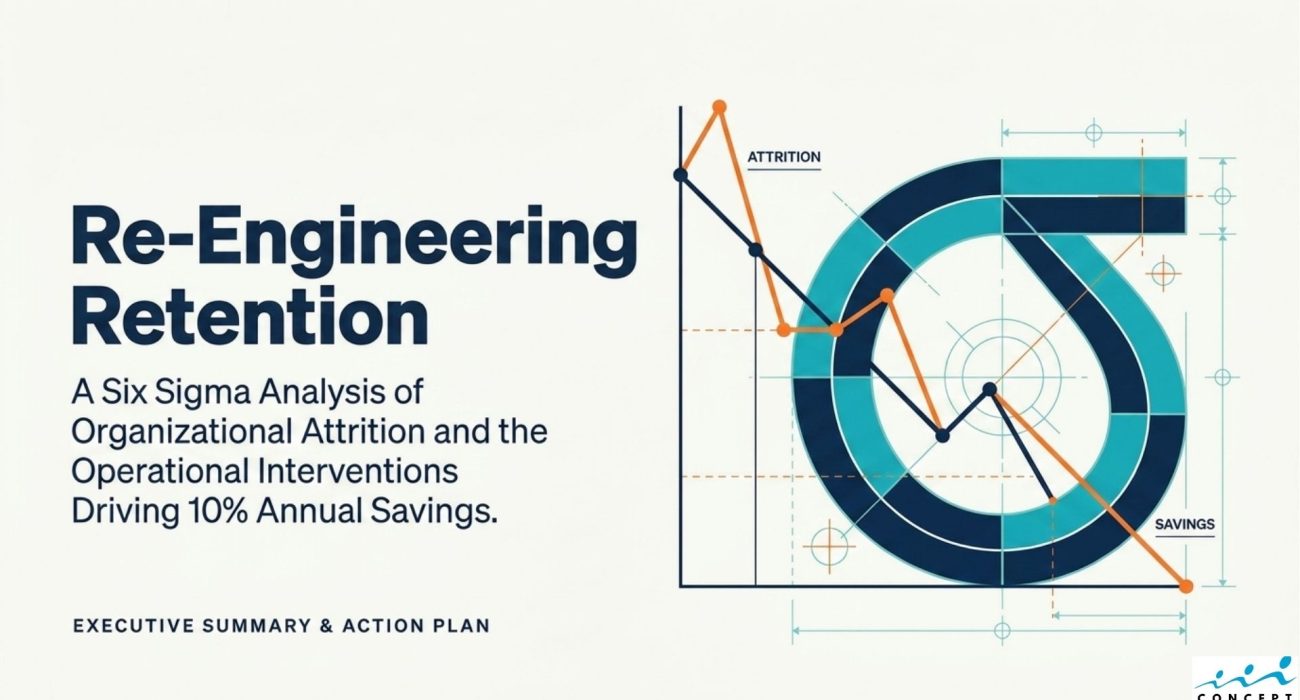
A leading organization was facing persistently high employee attrition, resulting in escalating recruitment costs, operational disruptions, and productivity losses. Over a six-year period, the average attrition rate reached 25%, creating a significant financial burden and impacting organizational stability.
Using the Six Sigma DMAIC methodology, a structured root-cause analysis was conducted to identify the key drivers of employee turnover. The study revealed that compensation gaps, inconsistent hiring practices, and limited performance transparency were the primary contributors to employee exits.
By implementing data-driven interventions, the organization established a roadmap to reduce attrition to 15%, improve workforce stability, and cut recruitment costs by nearly 50%.
The Business Challenge
Employee turnover had become a recurring operational challenge across multiple departments. The impact extended beyond hiring expenses and affected productivity, employee morale, customer service, and business continuity.
Key Challenges
- Average attrition rate of 25%
- Annual recruitment costs exceeding ₹20 Lakhs
- High turnover in sales and operations functions
- Extended vacancy periods impacting business performance
- Frequent recruitment cycles increasing management workload
The leadership team sought a sustainable solution that addressed the root causes rather than treating the symptoms.
Project Objective
The primary objectives of the project were:
- Reduce employee attrition from 25% to 15%
- Lower annual recruitment costs by 50%
- Improve candidate-role alignment
- Enhance employee engagement and retention
- Establish transparent performance management practices
Methodology
The project followed the Six Sigma DMAIC framework:
Define
The problem statement, project scope, stakeholders, and expected business outcomes were clearly established.
Measure
Historical workforce data spanning six financial years was analyzed, including:
- Attrition trends
- Recruitment expenses
- Exit interview feedback
- Department-wise turnover patterns
- Employee performance data
Analyze
Root-cause analysis identified three critical factors:
1. Compensation Misalignment
Salary structures did not adequately reflect city grade, experience level, and market benchmarks.
2. Inconsistent Recruitment Practices
Selection processes varied across departments, leading to poor candidate-role fit.
3. Limited Performance Visibility
Employees lacked transparency regarding performance expectations, evaluations, and incentive calculations.
Solutions Implemented
1. Revamped Salary and Incentive Matrix
The compensation framework was redesigned to account for:
- City classifications
- Experience levels
- Role complexity
- Performance-linked incentives
This created a more competitive and equitable compensation structure.
2. Scientific Recruitment Filters
A standardized hiring framework was introduced, including:
- Psychometric assessments
- Structured interview evaluation criteria
- Interviewer training programs
- Candidate-role alignment metrics
The new process improved hiring quality and reduced early-stage attrition.
3. Transparent Performance Scorecards
Digital scorecards were implemented to provide:
- Monthly performance visibility
- Objective performance tracking
- Incentive transparency
- Consistent evaluation standards
Employees gained greater clarity regarding expectations and growth opportunities.
Expected Business Impact
Workforce Outcomes
- Attrition reduction from 25% to 15%
- Improved employee engagement
- Better candidate-role fit
- Increased workforce stability
Financial Outcomes
|
|---|
Strategic Outcomes
- Stronger talent retention
- Lower replacement costs
- Enhanced operational continuity
- Improved organizational performance
Key Takeaways
This project demonstrated that employee attrition is not solely an HR issue—it is a business performance issue with measurable financial consequences.
Organizations that apply structured problem-solving methodologies to workforce challenges can unlock significant savings, improve employee experience, and strengthen long-term competitiveness.
The most valuable insight from this initiative was clear:
When organizations replace assumptions with data-driven decision-making, employee retention becomes a measurable and manageable business outcome.