

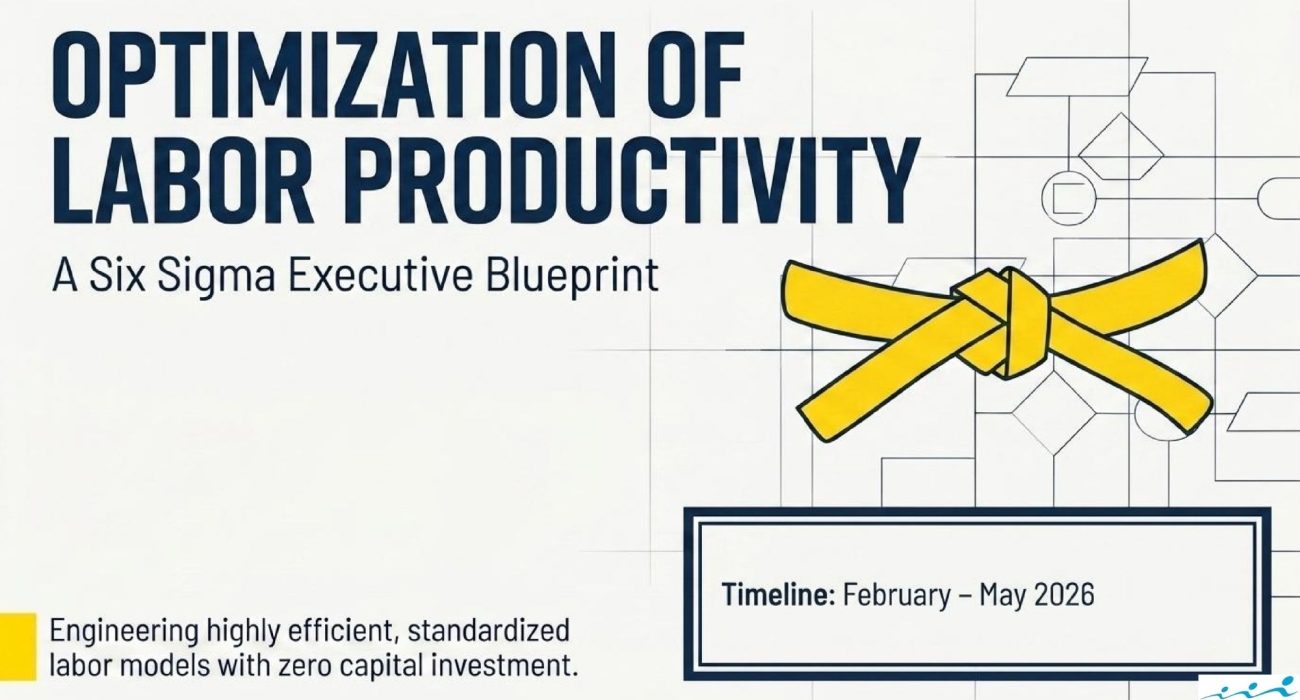
In today’s competitive manufacturing landscape, labor productivity is no longer just an operational metric—it is a strategic driver of profitability, efficiency, and sustainability. A leading manufacturing organization recently launched a Six Sigma-driven labor optimization initiative aimed at transforming workforce productivity without any capital investment.
This project, executed between February and May 2026, focused on engineering standardized, efficient labor deployment models across production operations. By leveraging the DMAIC methodology and data-driven workforce analysis, the organization identified hidden inefficiencies, optimized manpower allocation, and established sustainable productivity systems.
The Challenge: Rising Inefficiencies in Plant Operations
The organization faced multiple operational bottlenecks affecting labor productivity and overall efficiency across production lines.
Key Challenges Identified
- Uneven labor allocation across shifts and departments
- Excessive operator movement and idle time
- Lack of standardized work procedures
- High non-value-added activities
- Inflated labor costs
- Absence of data-driven manpower planning
The inefficiencies extended across the complete production value chain—from raw material receipt to finished goods dispatch.
A deeper analysis revealed that over 95% of the workforce consisted of outsourced labor deployed across multiple production floors. This created significant variability in workforce utilization, productivity, and operational control.
Project Objective
The primary goal of the initiative was to create a highly efficient and standardized labor productivity framework using Six Sigma principles.
Strategic Objectives
- Map all critical production processes
- Analyze workforce deployment by machine and shift
- Standardize operating procedures
- Optimize manpower utilization
- Reduce labor inefficiencies
- Improve operational balance across departments
Project Constraint
One of the most significant aspects of the initiative was the strict “Zero Capital Investment” condition. The organization aimed to achieve measurable productivity improvements using process optimization alone—without purchasing new machinery or expanding infrastructure.
The Six Sigma Approach: DMAIC Methodology
The project was executed using the globally recognized DMAIC framework:
1. Define Phase
The team established the project charter, identified cross-functional stakeholders, and mapped the production process using SIPOC methodology.
Key teams involved included:
- Production supervisors
- Maintenance teams
- Quality control personnel
- Operators and packers
- HR and planning departments
2. Measure Phase
In this phase, baseline operational data was collected and analyzed using:
- Histograms
- Pareto charts
- Time-series analysis
- Box plots
- Downtime tracking
The team measured productivity variations, labor utilization, and process inefficiencies across multiple production shifts.
3. Analyze Phase
Root causes were validated using advanced Six Sigma analytical tools, including:
- Cause-and-effect diagrams
- Scatter plots
- Gemba observations
- Why-Why analysis
- Stratification techniques
The analysis confirmed that non-standardized workflows and inconsistent labor deployment were major contributors to productivity loss.
4. Improve Phase
Improvement actions focused on:
- Standardized manpower allocation models
- Workflow balancing
- Pilot implementation on selected production lines
- Reduction of unnecessary movement and idle activities
- Development of standardized work instructions
The project team prioritized solutions using an Ease vs. Impact Matrix to ensure quick and sustainable implementation.
5. Control Phase
To sustain the improvements, the organization implemented:
- Weekly and monthly audit systems
- SOP revisions and standardization
- Daily management dashboards
- Visual control boards
- Training and competency validation programs
- Horizontal deployment across similar production areas
This ensured long-term operational stability and continuous monitoring of productivity performance.
Key Outcomes of the Initiative
The Six Sigma labor optimization project delivered several strategic benefits:
Operational Benefits
- Improved workforce utilization
- Balanced manpower allocation
- Reduced idle time and motion waste
- Enhanced workflow standardization
- Increased labor productivity
- Lower labor cost per unit
Strategic Benefits
- Improved operational visibility
- Stronger process discipline
- Sustainable continuous improvement culture
- Scalable productivity model for future deployment
Most importantly, the organization achieved these improvements without additional capital expenditure, demonstrating the power of process excellence and Lean Six Sigma methodologies.
Conclusion
This case study highlights how Six Sigma methodologies can transform labor productivity through structured problem-solving, workforce standardization, and data-driven decision-making.
By focusing on process optimization rather than capital investment, the organization successfully created a scalable and sustainable operational excellence model.
In modern manufacturing environments, organizations that strategically optimize labor productivity gain a significant competitive advantage through improved efficiency, reduced costs, and enhanced operational agility.