

Reducing Process Weight Variation Using Six Sigma DMAIC Approach
Executive Summary
A process improvement initiative was undertaken to reduce weight variation in a manufacturing process. The baseline variation was ±20g, leading to high rejection and rework costs. Using the DMAIC methodology, variation was reduced to ±8g, improving process capability and reducing cost.
Problem Statement
The process exhibited inconsistent output weight beyond acceptable tolerance limits, resulting in rejection, increased material consumption, and customer dissatisfaction.
Project Goal
- Reduce weight variation within defined tolerance
- Minimize rejection and rework
Business Impact
| Metric | Before | After | Improvement |
|---|---|---|---|
| Weight Variation | ±20g | ±8g | ↓ 60% |
| Rejection Rate | 5.5% | 2.1% | ↓ 62% |
| Rework Cost | ₹3,00,000 | ₹1,20,000 | ↓ 60% |
| Cpk | 0.85 | 1.45 | Improved |
Define Phase
- Identified weight inconsistency as critical defect
- Defined CTQ: Product Weight
- Mapped process flow
- Stakeholders aligned
Measure Phase
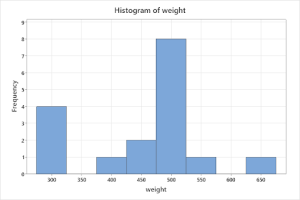
Initial data collection indicated high variability in process output.
Analyze Phase
| Category | Cause |
|---|---|
| Machine | Temperature fluctuation |
| Method | Improper parameter settings |
| Material | Inconsistent material mix |
| Man | Lack of standard operating procedure |
| Environment | Cooling variation |
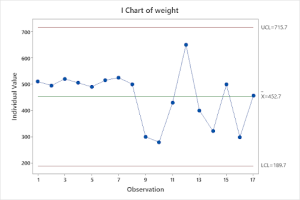
Process instability was confirmed using control charts.
Improve Phase
Actions Implemented:
- Standardized temperature profile
- Controlled material mixing ratio
- Fixed cooling system inconsistencies
- Implemented parameter checklist
- Operator training
Control Phase
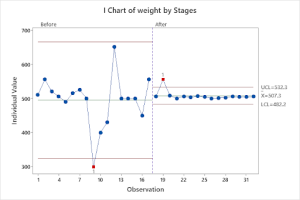
Control measures, including SOPs, monitoring systems, and periodic audits, were implemented to sustain improvements.
Conclusion
The Six Sigma DMAIC approach successfully reduced weight variation and improved process capability, leading to significant cost savings and quality improvement.