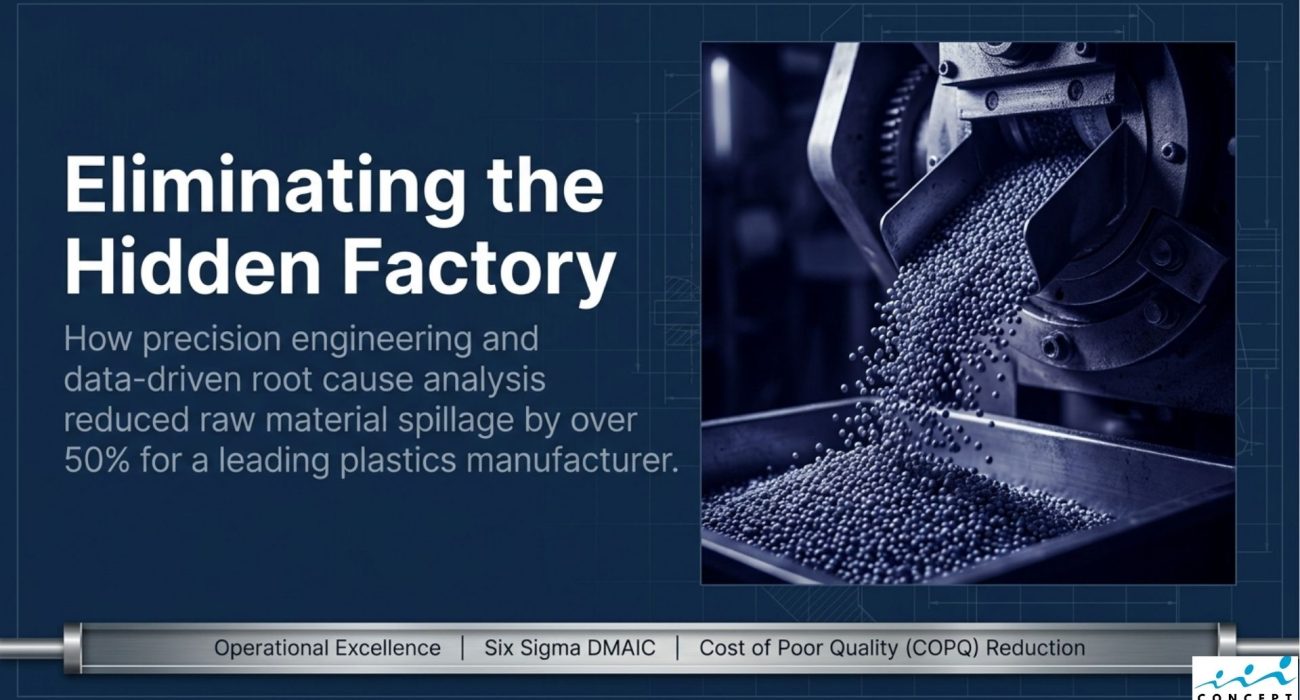
Material Spillage Reduction – Slashing Waste by 50%
Project Objective:
Reduce material spillage, improve process standardization, and lower annual financial losses in grinding operations.
Executive Summary
A detailed analysis of grinding operations identified chronic material spillage caused by tray design issues, worn seals, inconsistent operating practices, and lack of visual controls. Through engineering modifications, process hardening, and SOP standardization, the organization achieved a 58% reduction in spillage and significantly reduced annual losses.
Baseline Situation
| Metric | Baseline Performance |
|---|---|
| Average Monthly Spillage | 502 Kg |
| Total Recorded Loss | 6,520 Kg |
| Number of Incidents | 13 |
| Average Night Shift Spillage | 1.3 Kg |
Root Cause Analysis
| Issue | Impact | Root Cause |
|---|---|---|
| Tray Gaps | Material Leakage | Poor tray design |
| Worn Seals | Continuous Losses | Equipment deterioration |
| Operator Variation | Inconsistent Results | Lack of SOPs |
| Overfilling | Overflow Spillage | No visual limits |
Improvement Actions
| Action | Description |
|---|---|
| Tray Redesign | Improved containment and reduced leakage paths |
| Lock-Nut Installation | Improved equipment stability and sealing |
| Max Fill Indicators | Visual control to prevent overfilling |
| SOP Standardization | Standardized tray emptying and handling |
| Operator Training | Reduced process variation |
Results
| Metric | Before | After |
|---|---|---|
| Grinder 59 Average Spillage | 1.26 Kg | 0.76 Kg |
| Grinder 40 Mean Spillage | 2.44 Kg | 0.98 Kg |
| Annual Financial Loss | $785,650 | $393,830 (Est.) |
| Spillage Reduction | – | 58% Reduction |
Business Impact
- 58% reduction in day-shift spillage
- Significant reduction in annual material losses
- Improved process stability and operator consistency
- Standardized operating procedures across grinder units
- Better workplace cleanliness and operational efficiency
Conclusion
The project successfully addressed major sources of material spillage through engineering controls and standardized work practices. The initiative demonstrates how focused continuous improvement efforts can deliver measurable operational and financial benefits.